


Japan is not solitary one of Asia's greatest well-off nations. It ranks in the highest few in the list of dominant countries in the world.
How do they stand out from the world dominated by Europe and the United States and have a place in the world? In fact, this is all from the schooling structure that they are very well-intentioned of learning.
Let's take a look at what they are doing together with the education. Let us walk you through some facts there are following to make sure the quality of the instruction structure in the Japan, before we are heading to the education system in Japan.
Be polite before learning knowledge
Until the fourth grade of elementary school, Japanese schools did not have any examinations, only quizzes. They believe that it is not knowledge that should be learned before the fourth grade of primary school, but that it is important for the children to learn politeness.
They teach schoolchildren to respect each other and treat nature and animals. They will also learn to share and empathize.
In addition, it is also important to learn willpower, self-control and sense of justice.
The new school year starts on April 1
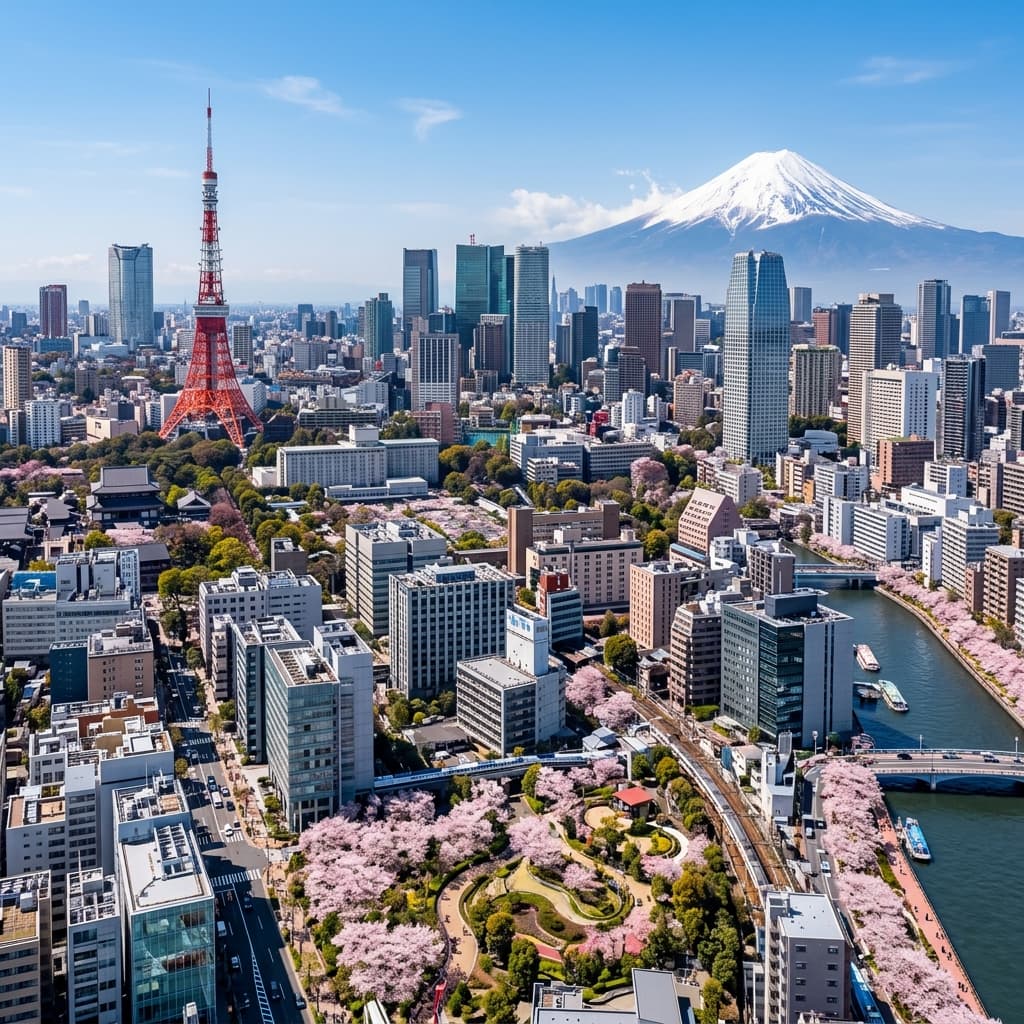
Schools in other countries in the world generally start a new school year from September or October. In April, when cherry blossoms are in full bloom in Japan, students can see beautiful cherry blossoms at the beginning of the new school year.
In addition, they have three semesters in one academic year, and there are six semesters each.
Japanese schools are cleaned by students themselves instead of cleaning staff
Japanese students need to clean up the campus area on their own, and students will clean up in groups to cultivate team spirit and mutual help. It also allows them to learn to respect various occupations.
Japanese school provides nutrition lunch
The Japanese education system provides a nutritious lunch that ensures that students have balanced nutrition. Students eat in the classroom with other students and teachers, and they can promote the feelings of each other and between teachers and students.
After-school counseling is popular
In order to enter a better country, students usually take part in after-school tutoring. They are not relaxed on holidays or weekends except for class hours of 8 hours a day.
As a result, Japanese students rarely have repeater status.
In addition to the general subjects, the class will also learn calligraphy and poetry
The book is as important for the Japanese as the art of painting. In addition, haiku also allows students to learn to express deep meaning with simple words.
No matter which kind can make students learn to respect the beauty of tradition.
Students need to wear uniforms in class
Almost all high school students in the country must wear uniforms during class. This kind of uniform requirement can allow students to enter the class mode and create a sense of identity among students.
The attendance rate of Japanese schools is as high as 99.9%
Almost everyone once wanted to skip class, but Japanese students are different. Not only are they not skipping classes but they are rarely late.
Even 91% of students did not ignore the teacher's lecture during class. What other countries can have this ratio?.
College entrance examination system
In the final year of high school, the senior high school students must choose a school they want to read and accept the university's entrance test. If they fail, they cannot enter university.
However, the competition for this kind of entrance test is very fierce. Only 76% of high school students can successfully enter the university.
Therefore, the period for preparing for the entrance examination is also called “hell”.
University time is the happiest time in their lives
Students who have successfully passed the university can take a short breath. In Japanese university time is regarded as the happiest time in life.
It also allows them to take a little rest before entering a stressful work life. Although Japan's education system is very different from those of Europe and the United States, it shares many common points with China and other Asian countries.
Does this mean that China can only become as strong as Japan if it only makes more efforts? What about the country? Let us wait and see\!.
The Japanese education system
Education in Japan is specific and works on the principle of "quality study \- a pledge and a guarantee of successful service", because Japanese usually deserves only one attempt to occupy a worthy place in society, which gives him work.
The education system in Japan is engaged in the continuous "production" of young people who are well versed in technology and mathematics. Approximately 98% of the inhabitants of the Land of the Rising Sun study or graduated from college, about 40% of boys and 20% of girls enter universities.
The main goal of Japanese pedagogy is the education of a person who can work together in a team. For the country and society this is absolutely necessary.
But in recent years, teachers have noted the urgent need for creative individuals, so the Japanese education system began to look more closely at young children, so as early as possible to identify among them students gifted with unusual abilities.
Preschool
The kindergarten in Japan is an absolutely optional level of the educational system, therefore most of the preparatory institutions are private. They take in children from the age of four, in rare cases from three.
There are also nurseries for very young children, but you can give them a child only if there are good reasons, and even then it is not a fact that the commission, after reviewing the application, will give permission, because staying in a nursery is contrary to the established principles of home education in the country.
In Japan, 22,925 nurseries, 11,007 of them are public, 11,918 are private. For two million 40 thousand pupils in the manger, 2 million 132 thousand teachers are looking after.
Kindergartens total 13,950, only 49 of them are state-owned, the rest \- private and prefectural. The system of preschool education in Japan is aimed at the socialization of the child.
Kids learn to communicate with peers, adapt to the team, which helps quickly get used to the school. Japanese kindergartens pay great attention to the formation of skills of independent work, children are taught to appreciate health and take care of the environment.
School
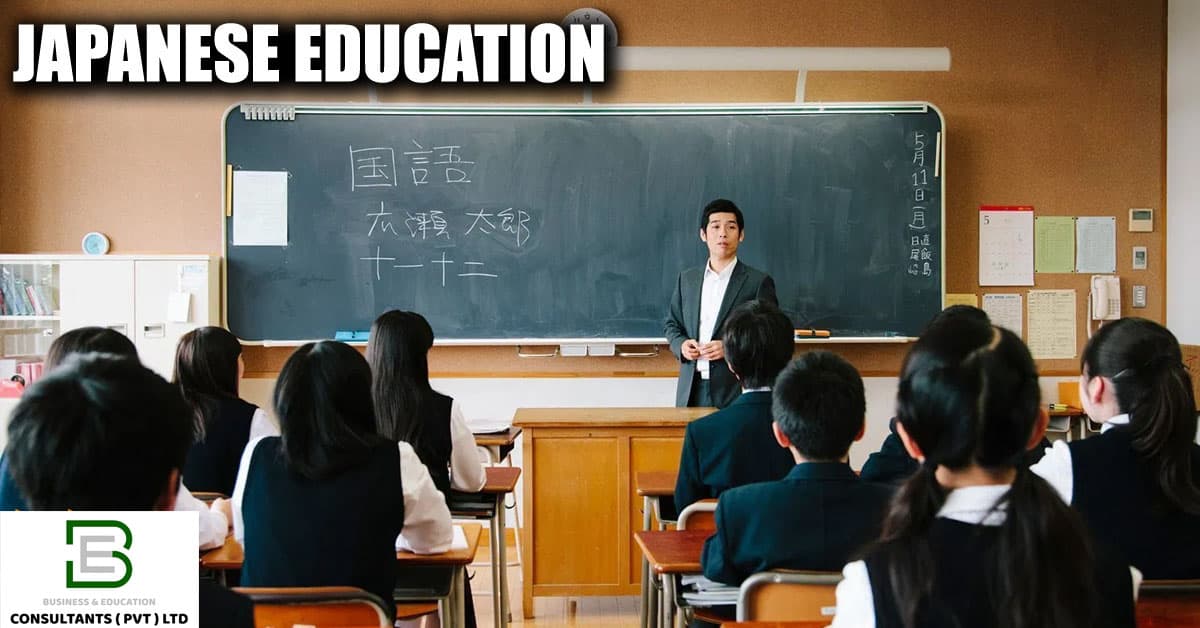
The system of school education in Japan is organized by the state. 95% of schools are municipal and financed by the budget, other secondary schools are private, and therefore paid, training in them is very expensive.
The full course of secondary education is 12 years, only primary and secondary school are required. The academic year lasts 11 months \- from April to March.
In elementary school children are accepted at 6 years old and graduated in 12\. At this stage, students learn the basics of the classical set of subjects and the first 1 850 characters \- in order to fluently read, you need to know 3,000 characters of Japanese writing.
In junior high school children are three years old, more deeply mastering subjects. A foreign language is carefully studied, and after lessons students attend various creative circles, where they are occupied until the evening.
To get a full secondary education you need to go through a three-year senior school, in which, in parallel with the study of subjects, young people master the professions and specialties depending on the profile of the school.
- Academic
- Natural science
- Technical
- The general
- Artistic Although high school is not compulsory, it is completed by at least 94% of students. In the process of studying, high school students are engaged in evening tutoring schools, which offer additional training to all comers without age restriction. In the Japanese education system, these structures serve as a support in mastering the school curriculum and preparing for exams and help to fill the knowledge gaps accumulated due to illness or other reasons. The domestic secondary specialized educational institutions are similar to the colleges of Japan, which are:
- Fresher
- Technological
- Special orientation The younger ones are mostly girls who are trained in the humanities and natural sciences, medicine, and technical creativity for two years. Technological colleges prepare electronic engineers, machine builders and builders for five-year programs. In the highly specialized institutions of wisdom of professions master future designers, mechanics, tailors, cooks.
Higher education
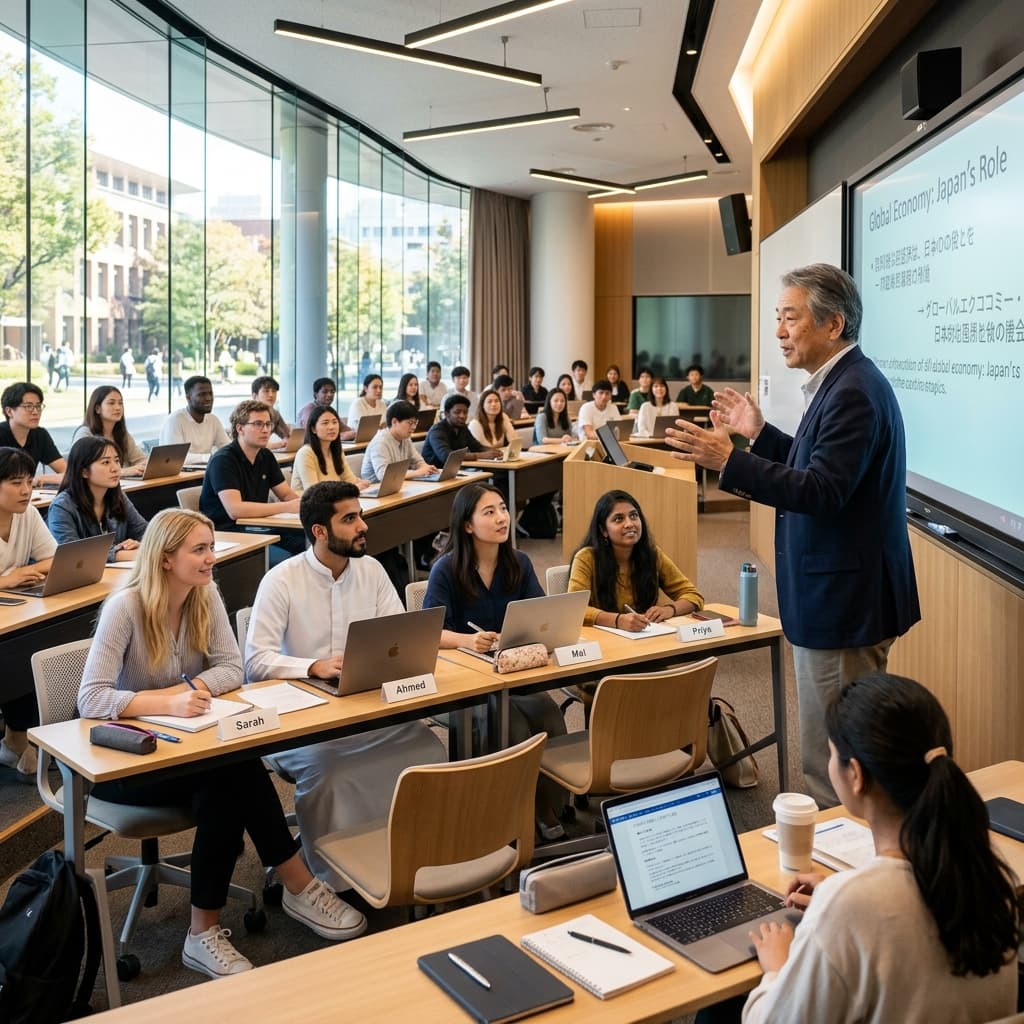
The final stage of the education system in Japan is higher education. Feature of the Land of the Rising Sun \- universities full and accelerated cycle with terms of training in four and two years.
In technical institutes students spend five years. In total there are 726 universities in Japan, 507 of which are universities: 96 \- national, 39 \- state, 372 \- private.
To start studying at a state university, an applicant must pass two exams.
- The first \- testing the National Center for Admission to Universities
- The second is an introductory test directly in the university, to which applicants are allowed, if they show satisfactory results in the first stage. To enroll in a private university, one entrance examination is sufficient. Some non-state higher education institutions include primary and secondary schools in their structure. In this case, a student who successfully ends each class can enter a university without preliminary examinations. Universities of Tokyo, Osaka, Kyoto, Tohoku, Nagoya, Hokkaido, Kyushu and the Tokyo Institute of Technology are among the 30 best universities in Asia. The system of higher education in Japan involves three types of diplomas,
- Bachelor \- 4 years
- Master \- 2 more years
- Doctors – three. This approach extends to both public and private educational institutions