




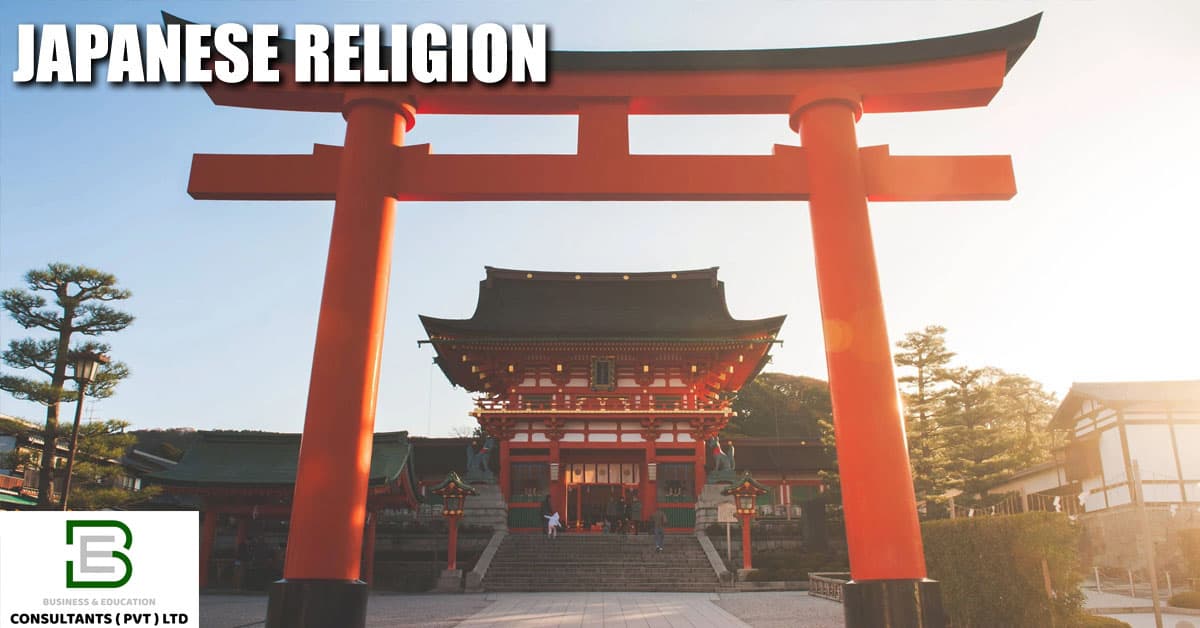
Shintoism and Buddhist believers in Japan account for the majority. In Japan the era of Shinto and Buddhism studies (a kind of syncretism) lasted long. There is an ambiguous aspect in the distinction between Shinto and Buddhism even after the separation of the Buddha and Buddha in the Meiji Restoration. Also, in order to escape the Buddha Buddhism, there are many cases that what was originally a temple became a shrine. For these reasons, altar Festival Buddhist altar are also at home, the Buddhist temple parishioner of the shrine and at the same time is a parishioner home that is also not a few. This is why it is said that more than 200 million people agree with those who believe in Shinto and those who are devoting to Buddhism. Changing the viewpoint did not regard that the two religions Shinto and Buddhism existed in parallel in Japan, there was a unique faith in Japan where Shintoism and Buddhism swallowed each other and became all together (or even now It is also considered that it is natural. Both in the current Historically, birthday, seven hundred fifty-three \- age ceremony , such as and prayer events Halle Shinto's event is, such as that surrounding the funeral, memorial service and views of life and death foul will share the functions to Buddhism plays It can also be said that they together constitute a view of religion.Shinto system is about 120 million people, the Buddhist system is about 90 million people, the Christian system is about 2.94 million people, the other about 906 Total million people, totaling 191.71 million people, which is about 1.5 times the total population of Japan. However, in a questionnaire survey for individual citizens, the result of 20% to 30% often comes out for "people who have some beliefs or beliefs''.
The following are listed as factors that make these figures
- ###### *As statistical surveys are conducted by religious corporations as a respondent as a respondent, each religious organization tends to inevitably declare the number of believers of its own organization to a greater extent.*
- Regular Christianity, Islam and other participating in worship services are not treated as believers until receiving ceremonial ceremonies such as baptism and Shahada. Also, in many Christian organizations, it is common for expenses to be expelled in a few years in case of lost communication. However, in Shintoism and Japanese Buddhism , examples in which all local residents are regarded as female , those who are believers of other teachers or those who express no religion are counted in the dancer of the temple to which the birthplace belongs , the Hatsumode to the shrine There are examples to calculate the number of supporters calculated from the number of sales and distribution of spells such as defenders and wishes, including examples of including worshipers of the number of believers.
- In current Japanese society, generally, which religion / religion is believed is not much regarded, and individuals are also less conscious of their own faith (including cases of self-recognition of no religion). Therefore, there is little raise of protest voices to the survey method which can be said to be something like the above, and inconvenience does not occur in real life at the same time. In addition, there is a negative view toward religion in general, there is also a tendency to ask others to ask faith itself as a taboo.
- ###### *Buddhism*