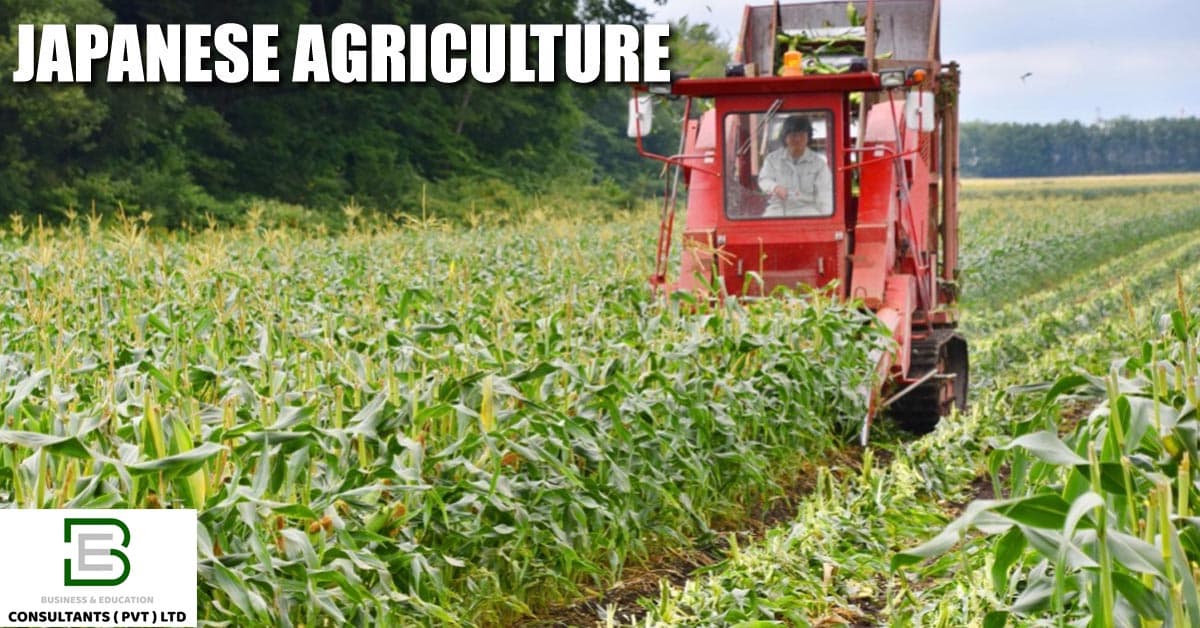
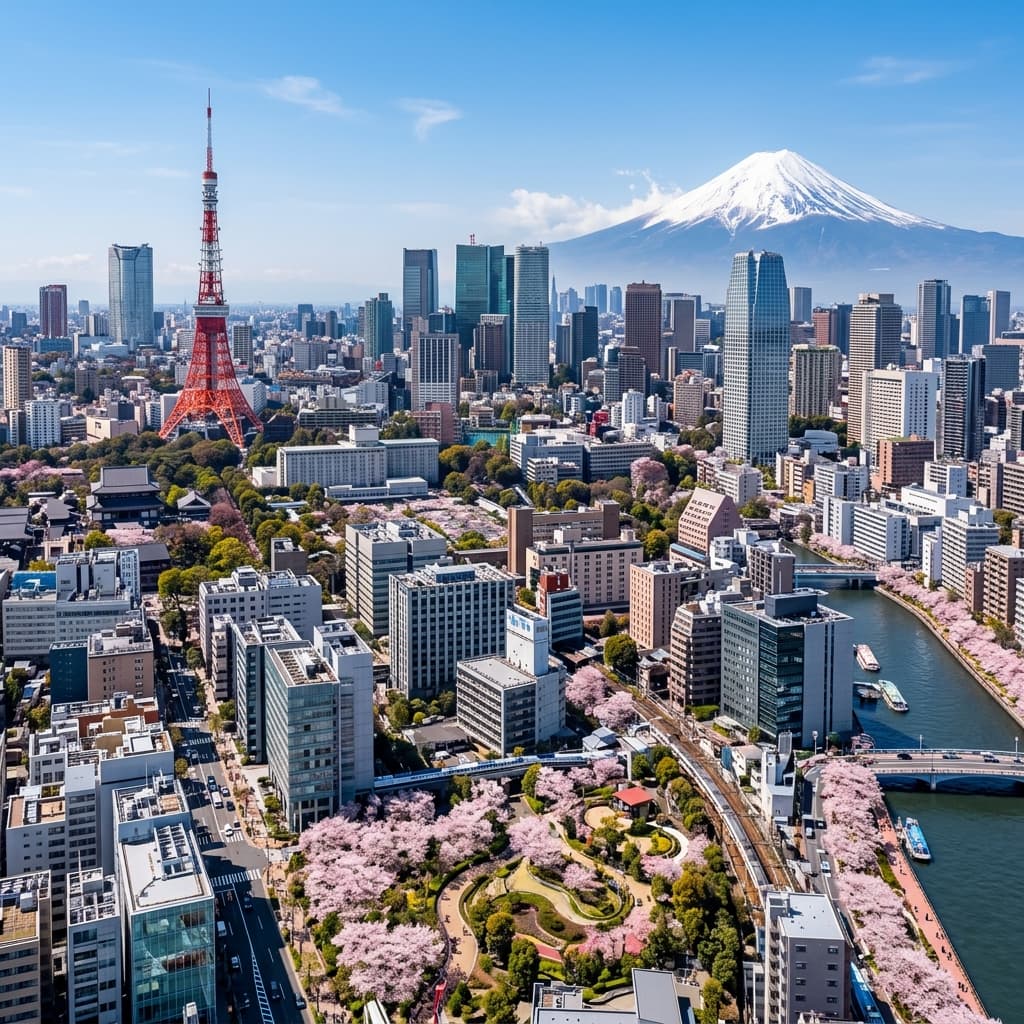
Japan's natural resources are limited, but the people who live in Japan have utilized the maximum resources to gain higher value of production and are succeeded. With mountains and hills accounting for about 80% of the total area, and there are more volcanoes and earthquakes. Peak Mount Fuji, 3,776 meters above sea level. The coastal plains are narrow and scattered, and the Kanto Plain is the largest. The coastline is long and curved, about 30,000 kilometers, many bays and good harbors. Temperate marine monsoon climate, summer and more typhoons, the annual average temperature above 10 °C. The annual rainfall in most areas is 1000-2000 mm. There are more than 600 large and small lakes in Japan; rivers are short-lived and have abundant hydraulic resources, but they are not conducive to navigation. Japan's soil is barren, mainly black soil (volcanic ash), peat soil and pan-alkaline soil, and most alluvial soils have been reclaimed as paddy fields, forming special paddy soils. According to geographical location, climate, soil conditions and production characteristics, Japan can be divided into 9 agricultural areas such as Hokkaido, Tohoku, Hokuriku, Kanto and Dongshan, Donghai, Kinki, China, Shikoku, and Kyushu.The scale of business is small and the proportion of rural households with concurrent income increases. Among Japanese peasant households, professional farmers account for only 16%, and the remaining 84% are concurrently rural households. Among the concurrently-employed rural households, the "first-come-employed rural households" with agricultural income as the main source of living accounted for 14% and the “second-part-time rural households with non-farm income accounted for an overwhelming majority, reaching 70%. Japanese agriculture is dominated by small-scale operations, but farmers operating more than 3 hectares are increasing, and the trend of arable land concentration to larger farmers is also becoming increasingly apparent. The large-scale dryland farming of key rural households is particularly significant. In addition, the expansion of the paddy field scale of the cooperative industry (cooperation) business for sales purposes is also significant. On average, the cultivated land per business entity is 19 times that of the farmer households. Concentrating and expanding the scale of land through the flow of agricultural land is one of the core contents of the "new policy" of agriculture formulated by the Japanese government in 1992\. The comprehensive development of agriculture, forestry, animal husbandry and fishery, and the production structure tends to be coordinated. Before the Second World War, Japanese agriculture was dominated by rice, and animal husbandry was very backward. In the half century after the war, agriculture, forestry, animal husbandry and fishery have achieved great development, and the structure of agricultural production has changed significantly.
Main Elements in the Agriculture in Japan
In the last 20 years of crop cultivation, except for the self-sufficiency of rice in Japan (except for 1993), the acreage and total output of other crops have decreased year by year, the self-sufficiency rate has decreased, and imports have increased. Nowadays, the self-sufficiency rate of food in Japan is only 46%, the comprehensive self-sufficiency ratio of edible agricultural products is 65%, the self-sufficiency ratio of staple grains is 66%, and the self-sufficiency rate of feed is 26%.
Rice and beans
In 2017, the total rice production in Japan was approximately 11.26 million tons. The total output of soybeans is 280,000 tons, and the self-sufficiency ratio is only 4%, which is almost entirely dependent on imports (3rd from China's imports). The self-sufficiency rate of red adzuki bean is relatively high, and the major deficiency is mainly imported from China (the annual import is about 25,000 tons). Feeding corn 1.8 million tons, in recent years, imports have been around 16 million tons (imports from China accounted for the second place).
Vegetables
In the past 30 years, per capita consumption of vegetables has been maintained at about 110 kilograms. There are many kinds of vegetables, the main ones are 29 kinds, the vegetables of leaves and stem vegetables increase, and the vegetables and root vegetables decrease. In 2002, the output of carrots was 690,000 tons, 2.427 million tons of cabbage, 32,000 tons of green peas, and 2.8 million tons of fresh leaf and stem vegetables.
Fruits
The main fruits of Japan are oranges, apples, and pears, and the average annual consumption is 38.8 kilograms. Due to changes in the consumption structure, consumption has decreased, and the self-sufficiency rate has also dropped to 59%. The type and quantity of imports are increasing. In 1993, Japan produced 4.85 million tons of various fruits, including 1.86 million tons of mandarin oranges and a yield of 24,290 kilograms per hectare. The output of apples was 1,100,000 tons, and the yield was 21,250 kilograms per hectare. In 2002, the output of Japanese mandarin orange was 102,000 tons and the yield was 181,818 kilograms. / Ha; apple production 912,000 tons, yield 215071 kg / ha.
Flowers
As income levels increase, Japan's demand for flowers increases. The number of households producing flowers increased from 57,000 in 1960 to nearly 150,000 in 1993\. In the same period, the number of households whose flowers accounted for more than 80% of total income increased from 6.6% to 24.4%. The current annual sales of flowers in the world amounted to 200 billion U.S. dollars, and Japan's flower sales accounted for the largest in the world, reaching approximately 18 billion U.S. dollars. In the past 10 years, Japan's flower imports have continued to grow, mainly from the Netherlands, Thailand, New Zealand, Singapore, the United States, and Taiwan Province of China. According to the statistics of Japan's Ministry of Customs, the import volume of cut flowers (including cut flowers, cut leaves, and cut sticks) was approximately 11,000 tons in the first half of 1999, an increase of 14% over the same period of 1998, and the import amount was 8.72 billion yen. Increased by 3%. Of the imported flowers, Thailand accounted for 1.38 billion yen, the Netherlands accounted for 1.06 billion yen, and South Korea accounted for 640 million yen. The data also shows that compared with the same period in 1998, the proportion of Thailand's imports of flowers in Thailand fell by 11% and 21%, respectively, while that of Mainland China, Taiwan Province of China and South Korea increased by 7% respectively. 95% and 14%, flower imports from Colombia and Malaysia also increased.
Animal husbandry
In 2017, there were 4.654 million beef cattle, 294 million chickens and 96.12 million live pigs. At present, the number of beef cattle raised per household is close to 70 in Hokkaido and 30 in Dufu County, which is twice as many as 10 years ago. The average number of cows raised per head in Japan is 25.1, which has exceeded the EU average (20.6 heads), while Hokkaido has reached 38.8 heads per household, which is close to 40 heads in the Netherlands. Japan will continue to expand its scale and reduce costs while introducing efficient and labor-saving equipment and strengthening its business infrastructure. Japan's livestock production is mainly concentrated in places where there are many pastures such as Hokkaido. At present, farmers in Japan are intensively reared, or they are co-reared by several households, or one family is raising hundreds of livestock. This can save time and reduce costs. Japanese farms also implement mechanized feeding of livestock and use electronic computers for management.
Fishery
Japan is the fourth largest fishing country in the world. In Japan, the Pacific coastal waters have one of three major fishing grounds in the world ocean northern fishing grounds, rich in fish resources. Japan is the country with the largest number of fish in the world. Aquatic products play an important role in the Japanese diet. The net consumption of fish per person per day in 1997 (excluding the head, bones and internal organs) was 99 grams. In the 1960s, the amount of fishing in Japan increased significantly, ocean fishing increased to 2 times in 6 years, and offshore fisheries also increased. However, as countries in the world have successively delineated 200 sea fishing waters, plus the oil crisis in 1973, fuel costs have risen. Ocean fishing was hit. From the 70s and 80s, the growth of offshore fisheries became the center of Japanese fisheries. Japan's fishing volume reached its highest level in 1984, which was 12.82 million tons. Since then, Japan's fishing stock has continued to decline in order to protect fish resources. In 1997, it was 7.41 million tons. In recent years, Japan has vigorously developed aquaculture, but the increase in fishing volume is still very difficult. In 2000, the fishery output was only 5.752 million tons.During the 30 years, Japan's imports of aquatic products increased by 36 times. In 1997, Japan imported 6 million tons of fish and shellfish and exported 420,000 tons. In 1998, the total amount of aquatic products imported by Japan reached 1,642.5 billion yen, of which raw shrimp accounted for 22.2%, tuna accounted for 11.2%, carp and carp accounted for 7.5%, carp accounted for 6.8%, crab accounted for 5.8%, octopus accounted for 3.2%, cuttlefish accounted for 2.8 %, shrimp processed products accounted for 2.4%, carp seeds accounted for 2.1%, frozen carp meat accounted for 1.8%, mackerel accounted for 1.5%, other accounted for 32.7%. Most of the fish and shellfish imported from Japan are fresh products. In recent years, the number and amount of fish and shellfish imported by Japan have reached the highest point in history. The major importing countries and regions are the United States, Taiwan Province of China, China, South Korea and Thailand. The main fish species imported include tuna and mackerel (mainly in Taiwan Province of China), mackerel and mackerel (from North America, Chile, Norway, Russia, etc.). Imports of farmed shrimp have increased significantly, mainly from Asian countries such as China, India and Vietnam.